When you think of the 16-bit era, your mind likely jumps to the epic rivalry between the Super Nintendo and the Sega Genesis. But beyond these titans lay a fascinating world of "Other 4th Gen Consoles (TurboGrafx-16, Neo Geo)," systems that, while perhaps not dominating sales charts, pushed boundaries, cultivated fervent fanbases, and left an undeniable mark on gaming history. These weren't just also-rans; they were innovators, niche darlings, and bold experiments that often hinted at the future long before their mainstream counterparts caught up.
This isn't just a trip down memory lane; it's an exploration of the crucial role these consoles played in shaping the diverse and dynamic industry we know today. Let's peel back the layers and understand why these unique machines mattered.
At a Glance: The Unsung Heroes of the 16-Bit Era
- Pioneering Spirit: The TurboGrafx-16 (as the PC Engine in Japan) actually kicked off the 16-bit generation, introducing the world to the potential of CD-ROM gaming years before others.
- Arcade Purity: The Neo Geo brought uncompromised arcade power into homes, delivering graphics and sound that were simply unmatched for its time.
- Market Challenges: Both consoles faced significant hurdles, from aggressive competition and marketing budget disparities to steep pricing strategies.
- Lasting Legacy: Despite their struggles, they carved out passionate niches, influenced future console design, and offer unique gaming experiences still cherished by collectors.
- Technological Trailblazers: They often featured cutting-edge hardware, pushing the limits of what was possible in home entertainment.
The 16-Bit Battlefield: Setting the Scene
The fourth generation of video game consoles, fondly remembered as the 16-bit era, was a period of explosive growth and fierce competition. It was here that console gaming truly became a household staple, driven by remarkable leaps in technology. We saw the advent of powerful 16-bit microprocessors, game controllers evolving with multiple buttons (from 3 to 8!), and graphics that brought worlds to life with parallax scrolling, larger sprites, and a wider spectrum of colors. Audio, too, reached new heights with significantly improved stereo and digital sound.
While the fierce rivalry between Nintendo's SNES and Sega's Genesis defined the mainstream narrative, it's essential to remember that NEC Home Electronics actually fired the starting gun. Their PC Engine, which would become the TurboGrafx-16 in North America, launched in Japan in October 1987, predating both the Mega Drive/Genesis and the SNES. To truly appreciate the story of these groundbreaking systems, it helps to understand the broader context of the entire Learn more about 4th generation.
But what happens when you're an innovator, yet the market decides to crown other champions? That's precisely the story of the TurboGrafx-16 and the Neo Geo.
The TurboGrafx-16: Japan's Early Star, North America's Underdog
Imagine a console so successful it sold over half a million units in its first week in Japan. That was the PC Engine, developed by Hudson Soft and NEC. When it launched in North America in August 1988 as the TurboGrafx-16, expectations were high. It was a compact, innovative system, promising a new era of gaming.
A Powerful Start in the East
In Japan, the PC Engine became a sensation. Its small size, sleek design, and powerful hardware (often described as an 8-bit console with a 16-bit graphics chip) resonated deeply with consumers. NEC and Hudson Soft were visionary, not just with the core console but also with its revolutionary add-ons.
The real game-changer arrived in 1990 with the TurboGrafx CD (or PC Engine CD-ROM² System in Japan). At $399.99, it was a hefty investment, but it unlocked an entirely new dimension of gaming. CD-ROMs allowed for dramatically larger game worlds, higher-quality audio (including full redbook audio), and even full-motion video (FMV) sequences, which were mind-blowing at the time. Titles like Ys Book I & II were pioneers, showcasing what could be achieved with this new medium, blending traditional RPG gameplay with animated cutscenes and voice acting. It truly ushered in the early days of CD-ROM gaming.
The North American Challenge
Despite its Japanese success and technological edge, the TurboGrafx-16 struggled significantly in North America. By the time it launched there, Sega was already making waves with the Genesis, and Nintendo held an iron grip on the market with its NES, gearing up for the SNES.
Why the disparity? Several factors contributed:
- Marketing Misfires: NEC's marketing efforts simply couldn't compete with the aggressive, "blast processing" campaigns of Sega or the established brand loyalty of Nintendo.
- Retail Presence: Securing shelf space and prominent display in major retailers proved challenging.
- Game Library: While it had excellent titles, the North American library didn't always get the same robust localization and variety as its Japanese counterpart, nor did it consistently attract the big third-party developers who flocked to Sega and Nintendo.
- Confusing Add-ons: The array of peripherals, including the TurboGrafx CD, Super System Card, TurboExpress, and TurboDuo, while innovative, could be confusing and expensive for consumers.
By 1994, the TurboGrafx-16 was discontinued in North America, ceding the market to its better-funded rivals. Yet, its impact as the first console of the 16-bit era and a CD-ROM pioneer cannot be overstated.
The Neo Geo: Arcade Power, Home Price
If the TurboGrafx-16 was a story of early innovation meeting market realities, the Neo Geo was a tale of uncompromising quality meeting an equally uncompromising price tag. Launched by SNK in 1990, the Neo Geo Advanced Entertainment System (AES) wasn't just like an arcade machine; it was an arcade machine.
Unparalleled Arcade Purity
SNK's vision was audacious: bring the arcade experience home, perfectly. They achieved this by using virtually identical hardware for their Neo Geo MVS (Multi Video System, the arcade cabinet version) and the AES home console. This meant that when you popped a game cartridge into your Neo Geo AES, you were getting the exact same graphics, sound, and gameplay as you would at the local arcade. No compromises, no watered-down ports.
The technical specifications were impressive: a powerful Motorola 68000 CPU, a Zilog Z80 for sound, and dedicated custom chips for graphics, allowing for massive sprites, vibrant colors, and smooth animation that blew away anything the SNES or Genesis could offer at the time. The sound chip also delivered rich, powerful audio.
The Price of Perfection
Such unadulterated power came at a cost—a truly astronomical one. The Neo Geo AES launched at an eye-watering $649.99. To put that in perspective, the SNES launched at $199.99 and the Genesis at $189.99. But the console price was only the beginning. Neo Geo game cartridges, packed with the same robust ROM chips as their arcade counterparts, typically retailed for over $250 each, with some reaching $300 or more. This made Neo Geo ownership a luxury few could afford.
Neo Geo Pricing vs. Competition (Approximate Launch Prices):
| Console | Launch Price (NA) | Game Price (Avg.) |
|---|---|---|
| Neo Geo (AES) | $649.99 | $250+ |
| TurboGrafx-16 | $199.99 | $40-$60 |
| Sega Genesis | $189.99 | $40-$60 |
| SNES | $199.99 | $50-$70 |
| This extreme pricing strategy meant the Neo Geo was never going to be a mainstream success. Instead, it carved out a niche market among wealthy gamers, hardcore arcade enthusiasts, and businesses that would rent out the consoles and games. |
A Niche of Excellence and Legacy
Despite its limited audience, the Neo Geo cultivated an incredibly loyal fanbase. Its library, while smaller than its competitors, was packed with iconic fighting games like Fatal Fury, Art of Fighting, and the legendary King of Fighters series, as well as classic run-and-gun titles like Metal Slug. These games, often celebrated for their deep mechanics and stunning pixel art, set new standards for their genres.
The Neo Geo proved that there was a market for premium, high-fidelity gaming experiences, even if it was a small one. It remained in production until 2004, an astonishing lifespan for a console of its era, a testament to the quality of its hardware and software.
Beyond the Big Two: What Made Them Unique (and Challenging)
The stories of the TurboGrafx-16 and Neo Geo highlight a critical aspect of the 4th generation: innovation didn't always guarantee market dominance. While Sega leveraged aggressive marketing and a cool mascot like Sonic to build the enduring legacy of the Sega Genesis, and Nintendo countered with its own powerful brand and a stable of the classic titles that defined the SNES, these "other" consoles fought different battles.
The Innovation vs. Market Share Paradox
- CD-ROM Adoption: The TurboGrafx-16 was truly ahead of its time with the CD-ROM. While it provided huge advantages in storage and audio, the technology was still expensive and sometimes perceived as slow. It wouldn't be until the next generation that CD-ROMs truly became standard.
- Raw Power: The Neo Geo showcased what pure hardware power could achieve. However, this came at a commercial price that alienated most consumers. It was a console for enthusiasts, not the masses.
- Marketing Muscle: Both NEC and SNK lacked the colossal marketing budgets and brand recognition of Nintendo and Sega, making it difficult to cut through the noise.
The Broader Technological Leaps
It's worth remembering that the entire 4th generation was a hotbed of technological experimentation. Even as TurboGrafx-16 and Neo Geo played their unique roles, mainstream consoles were also pushing the envelope:
- Pseudo-3D Effects: Features like the SNES's Mode 7 revolutionized how 2D games could create the illusion of depth and movement, rotating and scaling backgrounds to give a pseudo-3D effect.
- Sprite Manipulation: Individual sprite scaling and rotation added dynamism to characters and enemies, making battles feel more epic.
- Early 3D Graphics: While rudimentary, simple flat-shaded 3D polygon graphics even made an appearance, hinting at the fully 3D worlds of the next generation.
- Enhanced Audio: Stereo and digital audio became standard, with consoles like the SNES using Sony's SPC700 chip to deliver rich, atmospheric soundscapes.
The Shifting Sands of the 4th Generation: Cultural Impact and Handhelds
Beyond the home consoles, the 4th generation was a transformative period for gaming in general. It introduced new cultural considerations and paved the way for handheld dominance.
The Entertainment Software Rating Board (ESRB)
Perhaps one of the most significant cultural impacts of this era was the public concern over game violence. Titles like Mortal Kombat on the Genesis (with its uncensored gore via a secret code) and Night Trap on the Sega CD add-on sparked controversy, leading to congressional hearings. Sega's decision to allow uncensored gore in Mortal Kombat initially gave it a sales edge over Nintendo's censored SNES version. This outcry ultimately led to the creation of the Entertainment Software Rating Board (ESRB) for age ratings, forever changing how games are marketed and consumed. This move had a profound effect on the industry, and it's important to understand the impact of the ESRB's formation.
The Portable Side of the 4th Gen: TurboExpress and Its Rivals
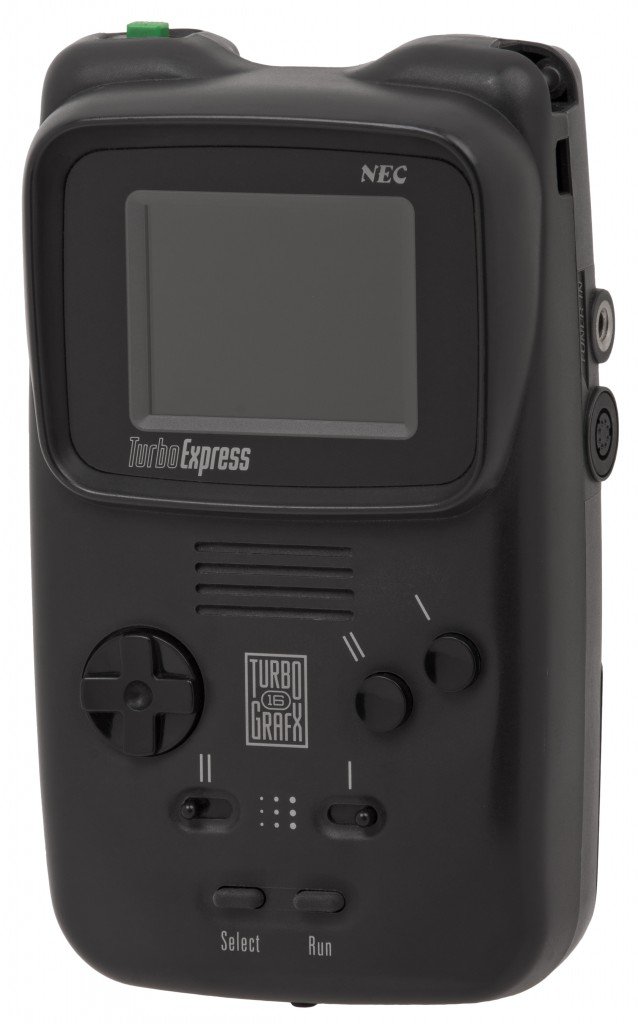
While focused on home consoles, NEC also made a significant foray into the handheld market with the TurboExpress in 1990. This device was essentially a portable TurboGrafx-16, complete with a color screen and the ability to play standard TurboChip games. It was a marvel of engineering, especially when compared to the monochrome Game Boy.
However, like its home console sibling, the TurboExpress faced uphill battles:
- Battery Life: Its color screen and powerful hardware resulted in abysmal battery life (around 3 hours) from six AA batteries, a critical flaw for a portable device.
- High Price: It was expensive, alienating many potential buyers.
- Competition: It couldn't compete with the Nintendo Game Boy's incredible popularity, which, despite its 8-bit processor and monochrome screen, offered unparalleled battery life and killer apps like Tetris.
Other handhelds like the Atari Lynx (color, backlight, multiplayer) and the Sega Game Gear (color, TV tuner) also tried to challenge the Game Boy, but they too suffered from poor battery life and failed to gain significant traction. This era truly highlighted the evolution of handheld gaming and the unique challenges of portable power. The TurboExpress, though it sold 1.5 million units, remains a fascinating "what if" in handheld history.
Why These Consoles Still Resonate Today
The TurboGrafx-16 and Neo Geo may not have won the 16-bit console war, but their stories are far from failures. They represent ambition, innovation, and the courage to pursue a distinct vision. Today, they hold a special place in the hearts of collectors and retro gaming enthusiasts for several reasons:
- Unique Libraries: Both systems boast exclusive game libraries that offer experiences you simply can't find elsewhere. The TurboGrafx-16 has quirky shooters and innovative RPGs, while the Neo Geo is a treasure trove of pristine arcade fighting games and action titles.
- Technological Marvels: Experiencing these systems with their original hardware is a tactile journey back in time, showcasing the sheer power of the Neo Geo or the innovative CD-ROM capabilities of the TurboGrafx-16.
- Historical Significance: They provide crucial context for understanding the evolution of the video game industry, demonstrating how different strategies (innovation vs. brute force) played out in a hyper-competitive market.
- Collector's Appeal: Due to their lower production numbers, especially for the Neo Geo, collecting these consoles and their games can be a rewarding, albeit expensive, hobby. Rare titles fetch high prices, but the thrill of finding and playing them is unmatched for many.
Navigating the World of "Other" 4th Gen Gaming
If you're intrigued by these overlooked gems and want to experience them for yourself, here's some practical guidance:
How to Experience Them Today
- Original Hardware: For the purist, acquiring a TurboGrafx-16 or Neo Geo AES is the ultimate goal. Be prepared for potentially high costs, especially for the Neo Geo and its games. Look for well-maintained units and be aware of common issues (e.g., capacitor degradation on older systems).
- Emulation: The most accessible and cost-effective way to explore these libraries is through emulation. Numerous emulators exist for both systems across various platforms (PC, retro handhelds, mini consoles). This allows you to experience a vast majority of their games without breaking the bank.
- Re-releases/Compilations: SNK has released several Neo Geo collections on modern consoles, offering a convenient way to play many of their classic fighting and action games. NEC's library is less frequently re-released, but some titles pop up on virtual consoles or curated retro collections.
Key Titles to Seek Out
For TurboGrafx-16:
- Bonk's Adventure / Bonk's Revenge: The console's mascot platformers, known for their unique prehistoric charm.
- R-Type (CD): An arcade-perfect (and enhanced) port of the classic shooter, showcasing the CD-ROM's capabilities.
- Ys Book I & II (CD): A groundbreaking action RPG that set new standards for CD-ROM gaming with voice acting and anime cutscenes.
- Military Madness: A classic turn-based strategy game.
For Neo Geo: - Metal Slug (series): Iconic run-and-gun action games known for their intricate pixel art and challenging gameplay.
- The King of Fighters (series): One of the most beloved fighting game franchises, renowned for its diverse roster and deep mechanics.
- Fatal Fury (series): SNK's original fighting game series, featuring Terry Bogard and Andy Bogard.
- Samurai Shodown (series): A unique weapon-based fighting game with a distinctive Japanese aesthetic.
- Garou: Mark of the Wolves: Often considered one of the finest 2D fighting games ever made.
Pitfalls to Avoid
- Exorbitant Prices: Be realistic about the cost, especially for rare Neo Geo games. Set a budget and stick to it.
- Hardware Maintenance: Original hardware can be old and might require repairs or maintenance (e.g., capacitor replacement). Factor this into your decision.
- Fake Cartridges: With the high value of some games, be wary of counterfeit cartridges, particularly for the Neo Geo. Research sellers and verify authenticity.
Your Next Dive into Gaming History
The 4th generation was a golden age, and while Nintendo and Sega rightly get much of the credit, the stories of the TurboGrafx-16 and Neo Geo offer a richer, more nuanced understanding of this pivotal era. They remind us that innovation takes many forms, market success isn't the only measure of impact, and true passion can forge unforgettable gaming experiences, regardless of sales figures.
So, next time you're reminiscing about the 16-bit era, take a moment to consider these unique systems. Dive into their histories, explore their games, and discover the fascinating contributions of the "other" consoles that dared to be different. You might just find your next favorite retro gaming obsession.