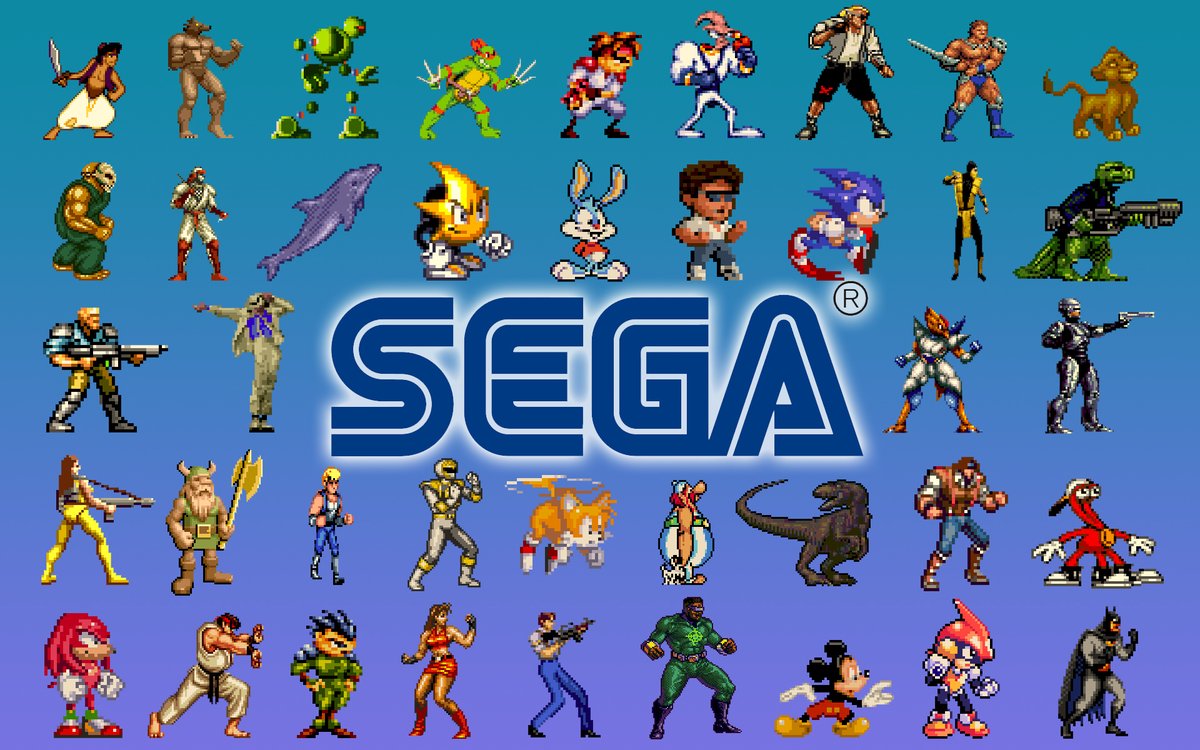
The Sega Genesis (Mega Drive) Spawned Many Diverse Console Models
In the late 1980s, an underdog emerged from Sega, daring to challenge Nintendo’s near-monopoly on home gaming. With aggressive marketing slogans like "Genesis does what Nintendon't," the Sega Genesis (Mega Drive) didn't just compete; it ignited one of the most iconic "console wars" in video game history. Far from being a one-off hit, this 16-bit powerhouse became a platform for innovation, leading to a surprising array of official and third-party console models that pushed the boundaries of what a home system could be.
At a Glance: The Sega Genesis/Mega Drive Story
- The Challenger: Sega's third home console, launched as Mega Drive in Japan (1988) and Genesis in North America (1989), directly taking on Nintendo's NES and SNES.
- Technical Edge: Powered by a 16/32-bit Motorola 68000 CPU and an 8-bit Zilog Z80 for sound, it offered arcade-like graphics and robust audio for its time.
- Marketing Prowess: Sega's aggressive youth-focused campaigns and a steady stream of arcade ports, plus the iconic Sonic the Hedgehog, fueled its success, particularly in North America.
- Ambitious Add-ons: Introduced peripherals like the Sega CD (for CD-ROMs and FMV) and the Sega 32X (for 32-bit graphics), though these faced market challenges.
- A Family of Consoles: Beyond the original, Sega and third parties released numerous variations, from smaller revisions and portable handhelds to hybrid PC-console and boombox-integrated systems.
- Lasting Impact: Helped shape the modern console market, pioneered online services, and established key industry standards like game rating systems. Its legacy continues with modern re-releases and a dedicated fan community.
The Genesis of a Legend: Sega's 16-Bit Vision
Before the console wars erupted, Sega set out to build a machine capable of bringing arcade power home. Under the supervision of Hideki Sato and Masami Ishikawa, an R&D team adapted Sega's robust System 16 arcade board into a home console. This core philosophy—delivering an authentic arcade experience—would define the system's early appeal.
Released first in Japan as the Mega Drive on October 29, 1988, it arrived in North America less than a year later, in September 1989, rebranded as the Genesis. This name change was due to trademark issues, but it quickly became synonymous with Sega's bold challenge to the status quo. It was a pivotal moment in gaming, signaling the true arrival of the 16-bit era.
Under the Hood: The Power That Drove a Generation
The Genesis wasn't just a pretty face; it packed serious processing muscle for its time. At its heart lay a 16/32-bit Motorola 68000 CPU clocked at a respectable 7.6 MHz. This main processor handled the heavy lifting for graphics and game logic. For sound, Sega shrewdly incorporated an 8-bit Zilog Z80 processor, offloading audio duties and allowing the 68000 to focus on performance.
Memory-wise, the console boasted 64 KB of general-purpose RAM, another 64 KB dedicated to video RAM, and 8 KB for audio. While these numbers might seem small by today's standards, they were ample for displaying 61 colors simultaneously from a palette of 512, creating vibrant and dynamic worlds. Games were delivered on durable ROM cartridges, which allowed for quick loading times and reliable performance, a significant advantage over the slower, more fragile floppy disks used by some competitors.
"Genesis Does What Nintendon't": Winning the Console Wars
Sega's journey wasn't without its challenges. In Japan, despite its technical prowess, the Mega Drive struggled against the established PC Engine and, later, the formidable Super Famicom (SNES). However, it found fertile ground elsewhere. North America, Brazil, Australia, and Europe embraced the Genesis with enthusiasm.
Its success was multifaceted:
- Arcade Authenticity: Sega had a deep library of arcade hits, and the Genesis was the closest many players could get to the coin-op experience at home. Titles like Altered Beast, Golden Axe, and Streets of Rage proved incredibly popular.
- The Rise of Sonic: In 1991, Sega introduced Sonic the Hedgehog, a character designed to be cooler and faster than Nintendo's Mario. Bundling Sonic with the console proved to be a stroke of genius, immediately giving the Genesis an iconic mascot and a game that showcased its speed capabilities.
- Sports Dominance: Sega cultivated strong relationships with Electronic Arts (EA), leading to exclusive, high-quality sports franchises like Madden NFL and NHL '94. These realistic and engaging titles attracted a broader, older demographic.
- Aggressive Marketing: Sega's marketing was bold, edgy, and directly challenged Nintendo. Slogans like "Genesis does what Nintendon't" and "Welcome to the Next Level" resonated with teenagers looking for something different. When the SNES launched in North America in 1991, Sega was ready, and the ensuing "console war" saw the Genesis initially outsell its rival, a testament to Sega's strategy.
Expanding the Experience: Peripherals and Ambitious Add-ons
Sega wasn't content with just selling consoles and cartridges. They harbored grand ambitions for expanding the Genesis experience, leading to two significant, albeit commercially challenged, add-ons.
The Sega CD (Mega-CD): A Glimpse into the Future
Released in Japan in 1991 and North America in 1992, the Sega CD was a revolutionary concept. This CD-ROM peripheral attached to the side of the Genesis, leveraging the larger storage capacity and superior audio quality of compact discs. It promised:
- Massive Storage: CDs could hold significantly more data than cartridges, opening doors for larger, more complex games.
- Enhanced Audio: Redbook audio capabilities meant games could feature full orchestral scores or high-quality vocal tracks.
- Full Motion Video (FMV): The Sega CD was perhaps best known for its ability to play short video clips, leading to games like Night Trap and Sewer Shark. While impressive at the time, the grainy, low-resolution video often prioritized novelty over compelling gameplay.
Despite selling 2.24 million units worldwide, the Sega CD faced an uphill battle. Its high price (initially $299, nearly as much as the Genesis itself) and a limited, often experimental, software library—many early games were criticized for being little more than interactive movies—hampered its widespread adoption. It was a bold step, but perhaps too far ahead of its time.
The Sega 32X: A Stopgap in the 32-Bit Race
As the mid-90s approached, the industry began its transition to 32-bit gaming. Sega, eager to bridge the gap between the Genesis and its upcoming 32-bit console (the Saturn), launched the Sega 32X in November 1994. This mushroom-shaped add-on plugged directly into the Genesis's cartridge slot, adding two 32-bit SuperH-2 processors. It allowed the Genesis to play new 32-bit games, offering improved 3D graphics and greater processing power.
Initially, demand was high, with consumers eager to get a taste of next-generation gaming. However, Sega's strategy quickly backfired:
- Consumer Confusion: The Sega 32X retailed for $159.99. Combined with the Genesis and potentially a Sega CD, a full setup was expensive and complex. Consumers were left wondering if they should invest in the 32X, the Sega CD, or wait for the full 32-bit Sega Saturn.
- Developer Reluctance: Developers, aware of the upcoming Saturn, were hesitant to invest significant resources into a stopgap peripheral that would have a short lifespan.
- Premature Obsolescence: The Sega Saturn launched just six months later, in May 1995, effectively rendering the 32X obsolete almost immediately.
With only 800,000 units sold worldwide, the Sega 32X was discontinued in early 1996, becoming a cautionary tale of fragmented hardware and confusing marketing.
Beyond the Box: A Family of Genesis and Mega Drive Variants
Perhaps one of the most fascinating aspects of the Genesis/Mega Drive story is the sheer number of console variations released, both by Sega and by third-party manufacturers. These models ranged from simple aesthetic redesigns to ambitious hybrid devices, showcasing the system's flexibility and enduring appeal.
First-Party Revisions & Experiments
Sega itself experimented widely with the Genesis hardware:
- Mega Drive II / Genesis (1993): Recognizing the original console's size and cost, Sega released a smaller, lighter, and more affordable revision. Often referred to as "Genesis 2" in North America, it streamlined the design and removed some less-used features (like the headphone jack and a dedicated port for the Power Base Converter). This became a widely popular model.
- Sega Mega Jet (1993, Japan): A curious entry, the Mega Jet was a simplified, compact Mega Drive initially designed for Japanese airlines. Lacking its own screen or power source, it allowed passengers to play Genesis games on the plane's entertainment system. It was later released as a consumer product but required an external display.
- Sega Nomad (1995): This was Sega's boldest attempt at a portable Genesis. The Nomad offered the full Genesis experience on the go, complete with a backlit color screen and the ability to output to a TV. It supported almost the entire Genesis cartridge library (excluding the 32X, Sega CD, and Power Base Converter). Its major drawbacks were its hefty size and its notorious appetite for 6 AA batteries, which it could drain in under two hours.
- Genesis CDX / Multi-Mega (1994): Sega's attempt at an integrated solution, the CDX (Multi-Mega in Europe and Japan) combined a Genesis and a Sega CD unit into a sleek, semi-portable device. Priced at US$399.95, it also doubled as a portable audio CD player. While technically impressive and aesthetically pleasing, its high cost limited its appeal.
- TeraDrive (1991, Japan): Developed in collaboration with IBM Japan, the TeraDrive was a hybrid console combining a Mega Drive with an IBM PC compatible computer. It allowed users to switch between PC and Mega Drive modes, and even run Mega Drive games in a PC window. It was a highly ambitious but expensive concept, primarily aimed at a niche Japanese market.
Third-Party Innovations & Localizations
Beyond Sega, many other companies saw potential in the Genesis hardware, creating unique variations:
- Aiwa Mega-CD (1994): An integrated boombox with a built-in Mega Drive and Sega CD. This fusion device aimed to offer a complete entertainment hub, perfect for music and gaming enthusiasts.
- al-Alamiah AX-660/AX-990 (1992): These fascinating devices were localized versions of Sega Genesis/MSX hardware for the Saudi Arabian market. They combined an MSX computer with a Mega Drive, often bundled with educational software.
- Amstrad Mega PC (1993): Similar to the TeraDrive, the British computer manufacturer Amstrad produced a PC that also housed a Sega Genesis, allowing users to switch between a DOS PC environment and Genesis gaming.
- JVC Wondermega / X'Eye (1992): JVC's integrated Genesis/Sega CD unit focused on high-quality audio and video output, aiming for a premium home entertainment experience. The X'Eye was its North American counterpart.
- Post-Discontinuation Consoles: Even after Sega officially moved on, the Genesis lived on through licensed re-releases. Majesco Entertainment launched the smaller, budget-friendly Genesis 3 in 1998. Companies like Tectoy (in Brazil) and AtGames continue to sell licensed variants and "plug-and-play" systems today, demonstrating the console's enduring popularity, especially in regions where it was exceptionally strong.
Facing the Music: Legal Battles and Social Scrutiny
The Genesis era was a dynamic time not just for technology and marketing, but also for legal precedents and cultural impact.
Sega v. Accolade (1993): The Fight for Fair Use
One of the most significant legal battles in gaming history involved Sega and third-party developer Accolade. Accolade reverse-engineered the Genesis console to understand how it worked, allowing them to publish unlicensed games for the system without paying royalties to Sega. In response, Sega introduced its Trademark Security System (TMSS), a boot-up check designed to block unlicensed games and display Sega's trademark only for authorized titles.
Accolade sued, arguing "fair use" for their decompilation. The Ninth Circuit Court of Appeals famously sided with Accolade, ruling that reverse engineering was permissible to achieve "software compatibility." While Sega and Accolade eventually settled, with Accolade becoming an official licensee, the case set a crucial precedent for reverse engineering in software development, balancing intellectual property rights with competition and innovation.
Congressional Hearings on Video Game Violence (1993): Rating Our Games
The early 90s saw growing public concern over video game content. Two Genesis-era games, in particular, became flashpoints: the interactive movie Night Trap on the Sega CD, criticized for its suggestive themes and "violent" content (though largely bloodless), and the arcade port of Mortal Kombat, with its realistic digitized graphics and infamous "fatalities."
Public outcry led to U.S. Congressional Hearings on Video Game Violence in 1993. Both Sega and Nintendo were called to testify. In response to potential government regulation, Sega proactively created the Videogame Rating Council (VRC), an early self-regulatory rating system. This move, along with similar efforts from Nintendo, ultimately contributed to the establishment of the industry-wide Entertainment Software Rating Board (ESRB) in 1994, which remains the standard for video game content ratings today. It was a turbulent period that fundamentally changed how games were presented and regulated.
The Enduring Legacy of Sega's 16-Bit Powerhouse
The Genesis era might have ended with the launch of the Saturn and the eventual demise of Sega's console business, but its impact resonates deeply within the history of video games.
- Incubator for Modern Sports Franchises: The Genesis's strong partnership with EA, particularly for its groundbreaking sports titles, laid the foundation for the annual sports game juggernauts we see today. It proved that sports simulations could be console sellers.
- Expanding the International Console Market: While Nintendo dominated Japan and the NES was strong globally, the Genesis broke new ground, particularly in North America, Brazil, Australia, and Europe, establishing a truly competitive international market for home consoles.
- Pioneering Online Services: Sega's innovations weren't limited to hardware. The Sega Channel, launched in 1994, was a subscription service that delivered games via cable television. At its peak, it reached 250,000 subscribers, allowing players to download and play a rotating library of Genesis titles. It was a visionary precursor to modern digital distribution and subscription models.
- Challenging the Dominant Player: Above all, the Genesis proved that a competitor could effectively challenge and even briefly surpass an industry giant like Nintendo. This fierce competition spurred innovation from both companies, benefiting consumers with better games and more advanced hardware.
- Sales and Survival: The Genesis sold an impressive 30.75 million first-party units globally, with additional millions from licensed variants that continue to be sold by companies like Tectoy and AtGames decades later. This speaks volumes about its enduring appeal.
Today, the Sega Genesis (Mega Drive) remains a beloved classic. Modern re-releases like the Genesis Mini, robust emulation communities, and even new commercial games developed by indie studios continue to celebrate its legacy. It's a testament to a console that dared to be different, that challenged the leader, and in doing so, helped shape the future of gaming.
Your Next Adventure with the Genesis/Mega Drive
Whether you grew up with a Genesis or are curious to discover its magic, diving into its world is easier than ever.
- Emulators: Software like Kega Fusion or RetroArch allows you to play Genesis games on your PC, often with enhanced graphics options. This is a great way to explore the vast library for free (with legally obtained ROMs, of course).
- Classic Consoles: You can often find original Genesis or Mega Drive consoles at retro game stores or online marketplaces. Pair it with a CRT television for an authentic experience. Look for the "Genesis 2" for a more compact and often reliable option.
- Modern Re-releases: The Sega Genesis Mini (and its sequel) are fantastic plug-and-play consoles that come pre-loaded with dozens of classic games, offering a convenient and high-quality way to enjoy the system on modern TVs.
- Tectoy & AtGames Variants: For those in Brazil or looking for budget-friendly options, the officially licensed consoles from Tectoy and AtGames provide new hardware to play classic cartridges or built-in digital libraries.
No matter how you choose to experience it, the Sega Genesis (Mega Drive) offers a rich tapestry of gaming history—a bold, innovative, and endlessly entertaining console that truly brought the "next level" home.