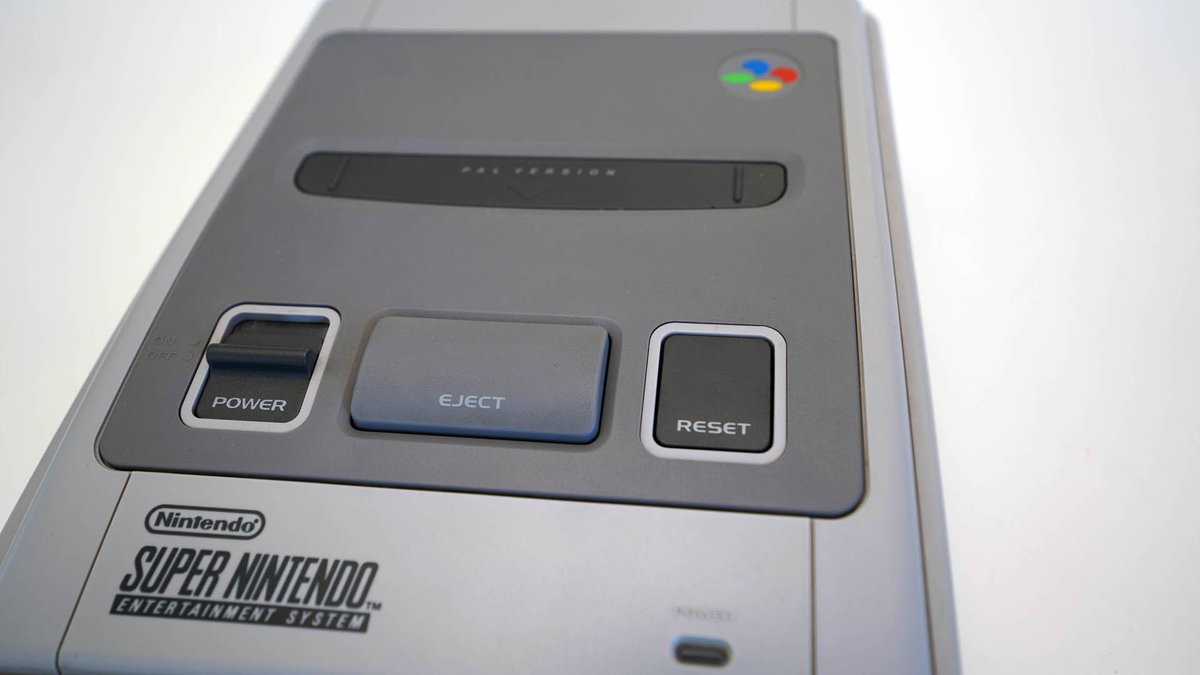
Remember the distinct click of an SNES cartridge locking into place, the vibrant splash screen of Super Mario World, or the pulse-pounding score of F-Zero? If so, you're not alone. The Super Nintendo Entertainment System (SNES), Nintendo's legendary 16-bit console, wasn't just another video game machine; it was a cultural phenomenon that defined a generation of gaming. Launched in Japan in 1990 as the Super Famicom and then in North America in 1991, the SNES arrived in a fiercely competitive market, yet it quickly carved out an undeniable legacy, proving that true innovation and unforgettable games could overcome any hurdle.
It wasn't just about selling millions of units; it was about elevating the art form, pushing technological boundaries, and delivering experiences that still resonate decades later. For many, the SNES wasn't merely a console; it was the heart of their childhood, a gateway to fantastical worlds, and the benchmark against which all future games would be measured.
At a Glance: Why the SNES Still Matters
- A Global Success Story: Despite a late launch and fierce competition from Sega's Genesis, the SNES became the best-selling 16-bit console, moving 49.1 million units worldwide.
- Technological Pioneer: Introduced advanced graphics (32,768 colors) and multi-channel audio (8-channel ADPCM), plus groundbreaking enhancement chips like Super FX for 3D graphics.
- A Library of Legends: Home to some of the most critically acclaimed and enduring games in history, including The Legend of Zelda: A Link to the Past, Super Metroid, Chrono Trigger, and Final Fantasy VI.
- Iconic Design: Instantly recognizable North American (boxy, purple) and Japanese/European (rounded, grey) designs featuring top-loading cartridges.
- Controller Innovation: Expanded on the NES design with shoulder buttons and a diamond-layout face button configuration that became an industry standard.
- Lasting Influence: Continues to be beloved by collectors and retro gamers, with many titles rereleased on modern platforms and its hardware inspiring new generations.
The Rise of a Legend: How Nintendo Defined 16-Bit Gaming
When Nintendo unveiled its second programmable home console, succeeding the iconic 8-bit Nintendo Entertainment System (NES), the stakes were incredibly high. The landscape of home gaming was rapidly evolving, and the race to dominate the new 16-bit era was already well underway. Sega had launched its Genesis (Mega Drive in Europe and Japan) two years prior, establishing a significant head start. Yet, Nintendo, with the Super Nintendo Entertainment System, wasn't just playing catch-up; it was setting a new standard.
The SNES debuted in Japan on November 21, 1990, followed by North America on August 23, 1991. Europe and Oceania received it in 1992, and South America in 1993. Even in South Korea, it found a home as the Super Comboy, distributed by Hyundai Electronics, while Playtronic handled its release in Brazil. This phased global rollout allowed Nintendo to meticulously craft its launch strategy and build anticipation.
Despite its late entry into the 16-bit console wars, the SNES proved to be a formidable challenger. It wasn't just a powerful machine; it was backed by Nintendo's unparalleled game development prowess and an expanding roster of third-party partners. By the time of its discontinuation in 2003, the SNES had sold 49.1 million units worldwide, eclipsing its primary rival, the Genesis, and firmly establishing itself as the best-selling console of the 16-bit era. This victory was particularly sweet in the crucial U.S. market, where it outsold the Genesis by a notable 1.5 million units. The SNES didn't just compete; it became the definitive console of its generation. To understand the broader context of this technological shift, you can Learn more about 4th Generation of video game consoles and their impact.
A Symphony of Silicon: What Made the SNES a Technical Marvel
At the heart of the SNES's success was its cutting-edge hardware, meticulously engineered to deliver experiences that felt years ahead of its time. Nintendo's design philosophy wasn't just about raw power, but about how that power could be creatively harnessed to produce stunning visuals and immersive soundscapes.
Graphics & Sound That Popped
The SNES boasted advanced graphics capabilities that were truly revolutionary. With a palette of 32,768 colors, it could display up to 256 on-screen simultaneously, leading to incredibly rich and vibrant visuals that often felt more alive than anything seen before. Its support for multiple background layers and sprite manipulation allowed for dynamic scrolling and impressive parallax effects, adding depth and realism to 2D environments.
Sound was equally groundbreaking. The SNES featured an 8-channel ADPCM (Adaptive Differential Pulse Code Modulation) audio subsystem. This meant it could play back high-quality, digitized sound samples simultaneously, far surpassing the simple waveforms of its predecessors. This capability allowed for sophisticated musical scores, detailed sound effects, and even rudimentary voice clips, giving games an emotional resonance previously unimaginable.
The Power Under the Hood: A Look at the Core Components
The console's brain was a Ricoh 5A22 CPU, a 16-bit WDC 65C816 derivative, clocked at a respectable 3.58 MHz (though it could slow to 2.68 MHz or 1.79 MHz depending on the operation). This CPU, while not the fastest on the market, was optimized for efficient data processing, particularly for the SNES's unique graphics architecture. It featured an 8-bit data bus and two address buses, carefully balancing performance with cost-effectiveness.
For audio, Nintendo turned to Sony, leveraging the expertise of engineer Ken Kutaragi (who would later lead the development of the PlayStation). The SNES's S-SMP audio subsystem utilized a 16-bit DSP (Digital Signal Processor) and an 8-bit SPC700 CPU. This dedicated audio hardware was a masterstroke, allowing games to produce incredibly rich and complex soundscapes without bogging down the main CPU. It was a true testament to specialized co-processing.
Cartridge Enhancement Chips: The Secret Sauce
Perhaps the most ingenious aspect of the SNES's design was its foresight to accommodate enhancement chips integrated directly into game cartridges. These chips allowed developers to augment the console's core capabilities, effectively future-proofing the system and extending its technical lifespan.
- Super FX: This was a RISC CPU designed specifically for 3D graphics calculations. Games like Star Fox and Doom used the Super FX chip to render polygonal 3D environments, a feat that would have been impossible for the base SNES hardware. It brought a glimpse of the 3D revolution to 16-bit consoles.
- Nintendo DSP chip: This chip specialized in vector and bitmap calculations, often used for advanced scaling, rotation, and other sprite manipulation effects. Pilotwings and Super Mario Kart famously leveraged the DSP-1 chip for their "Mode 7" like transformations, creating a pseudo-3D perspective that felt revolutionary.
- SA-1 chip: An enhanced 65C816 processor, the SA-1 chip essentially provided a second CPU within the cartridge. It could handle data compression, advanced DMA (Direct Memory Access), and even some processing tasks, significantly speeding up complex games. Super Mario RPG: Legend of the Seven Stars is a prime example of a game that benefited immensely from the SA-1's capabilities.
This innovative approach to hardware expansion meant that the SNES was not a static system. Its potential evolved with each new chip, allowing developers to continually push boundaries and keep the console at the forefront of gaming technology throughout its lifespan.
Design Icon: Regional Variations and Enduring Aesthetics
The SNES wasn't just powerful; it was also a thoughtfully designed piece of hardware, though its appearance varied significantly across different regions. These design choices often speak volumes about the target market and design trends of the era.
In North America, the SNES sported a distinctive, somewhat boxy design with purple sliding switches for power and reset, and a concave purple button for eject. This robust aesthetic, designed by Lance Barr, matched the prevailing industrial design trends of the time, exuding a sense of durability and youthful energy. Its two-tone grey casing became instantly recognizable to a generation of American gamers.
Contrastingly, the Japanese Super Famicom and European SNES models shared a more rounded, sleeker design. These versions featured colorful, almost pastel-hued buttons (red, yellow, green, blue) and darker grey accents, giving them a more playful and, arguably, more modern appearance for their respective markets.
Regardless of regional aesthetics, all SNES models incorporated a practical top-loading cartridge slot, making game swapping intuitive and easy. For video output, the console offered a versatile MULTI OUT connector, supporting composite, S-Video, and RGB signals, which was advanced for its time and allowed for significantly sharper picture quality than many contemporary consoles. Original versions also included a 28-pin expansion port for future peripherals (which saw limited use) and an RF output for compatibility with older televisions.
One interesting aspect was the regional lockout system. Physically, North American cartridges were shaped differently from Japanese and European ones, preventing cross-region play. Furthermore, a CIC (Copier Information Code) chip incompatibility between PAL and NTSC regions acted as an electronic lock. While these could be overcome with adapters or console modifications, they highlighted the segmented nature of the global video game market at the time. PAL consoles also faced the challenge of a 50 Hz vs. 60 Hz video standard incompatibility, often resulting in 16.7% slower framerates and noticeable letterboxing for games designed for NTSC regions.
The Games That Defined a Generation: A Library of Masterpieces
While impressive hardware laid the foundation, it was the unparalleled software library that truly cemented the SNES's place in history. The console became a haven for creativity, spawning franchises and pushing genres forward in ways that continue to influence game design today.
A Stellar Launch Lineup
The SNES hit the ground running with an impressive roster of launch titles that immediately showcased its capabilities. In both Japan and North America, two titles stood out:
- Super Mario World: A masterclass in platforming design, Super Mario World introduced Yoshi, expanded the Mario universe, and packed unprecedented secrets and replayability. Its vibrant graphics and clever level design were a perfect demonstration of the SNES's power.
- F-Zero: This futuristic racing game captivated players with its blistering speed and groundbreaking Mode 7 graphics, creating a convincing sense of perspective and motion without true 3D polygons. It was a dazzling technical showpiece.
North America also enjoyed other notable launch titles such as the flight simulator Pilotwings (another Mode 7 showcase), the city-building simulation SimCity, and the classic shooter Gradius III. This diverse lineup ensured there was something for everyone from day one.
Later Game Changers and Timeless Classics
As the SNES matured, its library exploded with innovation. One pivotal title, released in 1994, fundamentally shifted the console's market prominence in the later 16-bit era:
- Donkey Kong Country: Developed by Rare, this game stunned audiences with its pre-rendered 3D graphics, which gave it an unprecedented visual fidelity for the time. Its commercial success was monumental, selling 6.1 million copies in just 45 days, and proving the SNES could still compete graphically with the emerging 32-bit consoles.
Beyond these, a pantheon of games achieved legendary status, often hailed as some of the greatest of all time: - The Legend of Zelda: A Link to the Past: A sprawling adventure with an ingenious light world/dark world mechanic, this game perfected the top-down action-adventure genre and remains a benchmark for immersive storytelling and challenging puzzles.
- Final Fantasy VI (Final Fantasy III in North America): Widely considered one of the finest RPGs ever made, it boasted a compelling story, a diverse cast of characters, an epic soundtrack, and deep gameplay systems. It pushed the boundaries of emotional narrative in video games.
- Super Metroid: A masterclass in atmospheric design, exploration, and non-linear progression. Its intricate map, memorable boss battles, and sense of isolation made it a haunting and unforgettable experience.
- Chrono Trigger: A collaborative effort between RPG titans, Chrono Trigger featured an innovative time-traveling narrative, engaging battle system, and multiple endings, earning it a place as a beloved classic.
The SNES library transcended genres, offering everything from groundbreaking RPGs and platformers to innovative fighting games, sports simulations, and strategic adventures. This consistent stream of high-quality, innovative titles kept the console relevant and beloved long after its release.
Nintendo's Strategy: Policies, Censorship, and Market Dynamics
Nintendo's journey with the SNES wasn't just about technical prowess and great games; it was also shaped by its business strategies, which sometimes led to controversy and, ultimately, significant shifts in the industry.
Third-Party Developer Policies: A Tight Grip
Initially, Nintendo maintained strict policies for third-party developers, a carryover from its dominant NES era. These rules often included limitations like requiring developers to release only five games per year and restricting them from releasing their titles on competing platforms for a period of two years. While these policies aimed to ensure quality control and exclusivity, they also frustrated developers who sought more creative and financial freedom.
However, the intense competition from Sega's Genesis forced Nintendo to loosen its grip. As developers began to gravitate towards Sega's more open platform, Nintendo had to adapt, offering more favorable terms to retain talent and ensure a steady flow of games for the SNES. This competitive pressure ultimately benefited consumers by fostering a more diverse and innovative gaming landscape.
The Mortal Kombat Effect: Censorship and the Birth of the ESRB
One of the most defining moments in the SNES's history, and indeed in the history of the video game industry, involved the highly controversial game Mortal Kombat. When the ultra-violent arcade hit was ported to home consoles, Nintendo's long-standing policy of strict content censorship led to a heavily watered-down version for the SNES, replacing blood with "sweat" and toning down fatalities. Sega, in stark contrast, released a less censored version for the Genesis, which allowed players to unlock the infamous "blood code."
This stark difference in content became a flashpoint, fueling widespread public and political outcry over video game violence. The ensuing 1993 Congressional hearings on video game violence, with Nintendo and Sega executives testifying, put immense pressure on the industry. The ultimate outcome was the creation of the Entertainment Software Rating Board (ESRB), an industry-led self-regulatory body designed to provide age and content ratings for video games. This marked a monumental shift, bringing a standardized rating system that continues to serve as a cornerstone of consumer information in gaming today.
Beyond the Console: Controllers and Essential Peripherals
The SNES experience extended beyond the console itself, thanks to its groundbreaking controller design and a range of innovative peripherals that expanded gameplay possibilities.
The Iconic Controller: An Industry Standard
Building upon the successful D-pad and A/B button layout of the NES, the SNES controller was a masterclass in ergonomic and functional design. It introduced two crucial innovations that would become industry standards:
- A, B, X, Y Face Buttons: Arranged in a diamond layout, these four buttons provided more nuanced control and quickly became ubiquitous. The iconic concave/convex design of the A/B and X/Y buttons, respectively, offered a tactile difference, helping players differentiate them without looking.
- Shoulder Buttons: The addition of two shoulder buttons (L and R) at the top of the controller fundamentally changed game design, allowing for new actions like strafing, item cycling, or alternate attacks without removing fingers from the primary face buttons. This innovation paved the way for the complex control schemes of modern gaming.
The comfortable, rounded shape of the SNES controller was designed for extended play sessions, making it a beloved piece of hardware that influenced countless controllers that followed.
Expanding the Experience: A World of Peripherals
Nintendo and third-party developers offered a variety of peripherals that added new dimensions to SNES gameplay:
- Super Scope: A bazooka-shaped light gun peripheral, the Super Scope brought arcade-style shooting action to the living room with games like Battle Clash and Yoshi's Safari.
- Super NES Mouse: Packaged primarily with Mario Paint, the Super NES Mouse offered precise cursor control for creative and puzzle games, demonstrating the console's versatility beyond traditional action titles.
- Super Multitap: For those who loved local multiplayer, the Super Multitap expanded the controller ports, allowing up to five players to join in on games like Bomberman and NBA Jam.
- Super Game Boy: One of the most clever peripherals, the Super Game Boy adapter allowed players to insert Game Boy cartridges into their SNES and play them on a television screen, often with added color palettes and custom borders. It bridged the gap between Nintendo's handheld and home console ecosystems, offering a delightful bonus for Game Boy owners.
These peripherals, while not all achieving mainstream success, showcased Nintendo's willingness to experiment and provide varied ways for players to interact with their games, further enriching the SNES legacy.
The SNES's Evolving Legacy: From Discontinuation to Digital Revival
The lifecycle of a console typically concludes with its discontinuation, but for the SNES, this was merely a transition into a new phase of enduring popularity and digital revival.
Redesigned Models and Production's End
Towards the end of its commercial life, Nintendo released redesigned versions of the console to keep it fresh and cost-effective. In North America, the "New-Style Super NES" (model number SNS-101) was introduced in October 1997 for a more affordable US$99. Japan saw its equivalent, the Super Famicom Jr., in March 1998 for ¥7,800. This slimmer, more compact model, also designed by Lance Barr, represented a system-on-chip design, integrating more components into fewer chips to reduce manufacturing costs. However, this redesign came with some compromises, notably the removal of S-Video, RGB output, and the expansion port, simplifying the console's connectivity options.
Production of the original SNES models ceased in North America in 1999. In Japan, the Super Famicom continued production until September 2003, marking a remarkably long lifespan for a console.
A Console Reborn: Collectors, Emulation, and Modern Rereleases
The discontinuation of the SNES did not signal its demise; rather, it ushered in its status as a highly sought-after classic. Today, the SNES continues to be immensely popular among collectors and retro gamers. Its robust construction means many original units are still functional, and the scarcity of certain games drives a vibrant second-hand market.
Beyond physical collecting, the SNES library has seen a significant digital rebirth:
- Virtual Console: Nintendo began rereleasing SNES titles through its Virtual Console service on the Wii, Wii U, and Nintendo 3DS, making these classics accessible to a new generation of players.
- Super NES Classic Edition: In 2017, Nintendo capitalized on nostalgia with the release of the Super NES Classic Edition, a miniature replica pre-loaded with 21 iconic games, including the previously unreleased Star Fox 2. It was a runaway success, further cementing the console's cultural impact.
- Nintendo Switch Online: Subscribers to Nintendo Switch Online can access a growing library of SNES games, complete with modern features like save states and rewind functions, ensuring these masterpieces are readily available on Nintendo's current flagship console.
The console's enduring appeal is also evident in the world of unofficial emulation. Projects like Snes9x and ZSNES, which began in the mid-1990s, allowed players to experience SNES games on personal computers. This grassroots effort played a crucial role in preserving the SNES library and introducing its magic to those who may not have owned the original hardware. Nintendo itself eventually embraced official emulation, demonstrating the lasting value it places on the SNES's remarkable catalog of 1757 officially released games.
Frequently Asked Questions About the SNES
Even decades later, new fans and seasoned enthusiasts alike often have questions about this legendary console. Here are some common queries, answered concisely.
What's the difference between SNES and Super Famicom?
Essentially, they are the same console with regional differences. "Super Famicom" (short for "Family Computer") is the name for the console released in Japan. "Super Nintendo Entertainment System" (SNES) is the name used in North America, Europe, and other Western markets. The primary differences are the physical design of the console shell, the styling of the controller buttons (colorful on Super Famicom, purple on SNES), and regional lockouts (different cartridge shapes, CIC chip, and video standards).
Why was the SNES so successful against the Sega Genesis/Mega Drive?
The SNES's success stemmed from several factors. While it launched later, it boasted superior graphical and audio capabilities, particularly with its Mode 7 scaling/rotation effects and advanced sound chip. Nintendo also had an unparalleled first-party game development pedigree (e.g., Super Mario World, The Legend of Zelda: A Link to the Past) and eventually attracted a strong lineup of third-party exclusives. Its innovative use of enhancement chips in cartridges also kept it technologically competitive throughout its lifespan. Ultimately, a combination of powerful hardware, exceptional games, and strong marketing allowed it to win the 16-bit console war.
What were regional lockouts on the SNES?
Regional lockouts were mechanisms to prevent games from one region from being played on consoles from another. For the SNES, these included:
- Physical Cartridge Shape: North American SNES cartridges had a different plastic casing shape that wouldn't fit into Japanese or European Super Famicom/SNES consoles without modification.
- CIC Chip: An electronic "region chip" (CIC) within the console and cartridge had to match. Japanese/North American (NTSC) CIC chips were incompatible with European/Australian (PAL) ones.
- Video Standard: NTSC regions (e.g., North America, Japan) used a 60 Hz video signal, while PAL regions (e.g., Europe, Australia) used 50 Hz. Playing a 60 Hz game on a 50 Hz PAL console resulted in slower gameplay (16.7% slower framerate) and a "letterboxed" image due to aspect ratio differences.
Revisiting a Golden Age: How to Experience the SNES Today
The Super Nintendo Entertainment System remains a touchstone in gaming history, a system whose impact continues to resonate. Its games are not just relics of the past but vibrant, engaging experiences that hold up remarkably well. If you're feeling nostalgic or curious about this golden age of gaming, there are several ways to dive in:
- Collect Original Hardware: For the purists, collecting an original SNES or Super Famicom and its cartridges offers an authentic experience. Be aware that prices can vary wildly, especially for rare titles, and you might need specific cables or adapters for modern TVs.
- Emulation: Emulators like Snes9x and ZSNES provide a convenient way to play SNES games on your computer, often with enhanced features like higher resolutions, save states, and custom controller mapping. It's a great way to explore the vast library without breaking the bank.
- Modern Re-releases: Nintendo has made it easier than ever to enjoy SNES classics. The Super NES Classic Edition is a fantastic plug-and-play option, while a Nintendo Switch Online subscription grants you access to a curated library of SNES games directly on your Switch, complete with modern quality-of-life features.
Whether you choose to relive cherished memories or discover these masterpieces for the first time, the Super Nintendo Entertainment System promises an adventure. Its legacy is more than just specs and sales figures; it's the enduring joy, challenge, and wonder it brought to millions, a golden era that continues to inspire and entertain.